Google

Google To Retire 'Dark Web Report' Tool That Scanned for Leaked User Data (pcmag.com) 10

Google has decided to retire its free dark web monitoring tool, saying it wasn't as helpful as the company hoped. From a report: In a support page, Google announced the discontinuation of the "dark web report" tool, two years after offering it as a free perk to Gmail users before expanding it more broadly. The feature worked by scanning for your email addresses to determine whether they had appeared in data breaches, which often circulate on Dark Web marketplaces. The tool could then alert you about where the data was exposed, including any accompanying details such as dates of birth, addresses, and phone numbers.
Television

LG's Software Update Forces Microsoft Copilot Onto Smart TVs (tomshardware.com) 57

LG smart TV owners discovered over the weekend that a recent webOS software update had quietly installed Microsoft Copilot on their devices, and the app cannot be uninstalled. Affected users report the feature appears automatically after installing the latest webOS update on certain models, sitting alongside streaming apps like Netflix and YouTube.

LG's support documentation confirms that certain preinstalled or system apps can only be hidden, not deleted. At CES 2025, LG announced plans to integrate Copilot into webOS as part of its "AI TV" strategy, describing it as an extension of its AI Search experience. The current implementation appears to function as a shortcut to a web-based Copilot interface rather than a native application. Samsung TVs include Google's Gemini in a similar fashion. Users wanting to avoid the feature entirely are left with one option: disconnecting their TV from the internet.
Security

Security Researcher Found Critical Kindle Vulnerabilities That Allowed Hijacking Amazon Accounts (thetimes.com) 13

The Black Hat Europe hacker conference in London included a session titled "Don't Judge an Audiobook by Its Cover" about a two critical (and now fixed) flaws in Amazon's Kindle. The Times reports both flaws were discovered by engineering analyst Valentino Ricotta (from the cybersecurity research division of Thales), who was awarded a "bug bounty" of $20,000 (£15,000 ). He said: "What especially struck me with this device, that's been sitting on my bedside table for years, is that it's connected to the internet. It's constantly running because the battery lasts a long time and it has access to my Amazon account. It can even pay for books from the store with my credit card in a single click. Once an attacker gets a foothold inside a Kindle, it could access personal data, your credit card information, pivot to your local network or even to other devices that are registered with your Amazon account."

Ricotta discovered flaws in the Kindle software that scans and extracts information from audiobooks... He also identified a vulnerability in the onscreen keyboard. Through both of these, he tricked the Kindle into loading malicious code, which enabled him to take the user's Amazon session cookies — tokens that give access to the account. Ricotta said that people could be exposed to this type of hack if they "side-load" books on to the Kindle through non-Amazon stores.

Ricotta donated his bug bounties to charity...
AI

CEOs Plan to Spend More on AI in 2026 - Despite Spotty Returns (msn.com) 41

The Wall Street Journal reports that 68% of CEOs "plan to spend even more on AI in 2026, according to an annual survey of more than 350 public-company CEOs from advisory firm Teneo." And yet "less than half of current AI projects had generated more in returns than they had cost, respondents said." They reported the most success using AI in marketing and customer service and challenges using it in higher-risk areas such as security, legal and human resources.

Teneo also surveyed about 400 institutional investors, of which 53% expect that AI initiatives would begin to deliver returns on investments within six months. That compares to the 84% of CEOs of large companies — those with revenue of $10 billion or more — who believe it will take more than six months.

Surprisingly, 67% of CEOs believe AI will increase their entry-level head count, while 58% believe AI will increase senior leadership head count.

All the surveyed CEOS were from public companies with revenue over $1 billion...
AI

Entry-Level Tech Workers Confront an AI-Fueled Jobpocalypse (restofworld.org) 78

AI "has gutted entry-level roles in the tech industry," reports Rest of World.

One student at a high-ranking engineering college in India tells them that among his 400 classmates, "fewer than 25% have secured job offers... there's a sense of panic on the campus." Students at engineering colleges in India, China, Dubai, and Kenya are facing a "jobpocalypse" as artificial intelligence replaces humans in entry-level roles. Tasks once assigned to fresh graduates, such as debugging, testing, and routine software maintenance, are now increasingly automated. Over the last three years, the number of fresh graduates hired by big tech companies globally has declined by more than 50%, according to a report published by SignalFire, a San Francisco-based venture capital firm. Even though hiring rebounded slightly in 2024, only 7% of new hires were recent graduates. As many as 37% of managers said they'd rather use AI than hire a Gen Z employee...

Indian IT services companies have reduced entry-level roles by 20%-25% thanks to automation and AI, consulting firm EY said in a report last month. Job platforms like LinkedIn, Indeed, and Eures noted a 35% decline in junior tech positions across major EU countries during 2024...

"Five years ago, there was a real war for [coders and developers]. There was bidding to hire," and 90% of the hires were for off-the-shelf technical roles, or positions that utilize ready-made technology products rather than requiring in-house development, said Vahid Haghzare, director at IT hiring firm Silicon Valley Associates Recruitment in Dubai. Since the rise of AI, "it has dropped dramatically," he said. "I don't even think it's touching 5%. It's almost completely vanished." The company headhunts workers from multiple countries including China, Singapore, and the U.K... The current system, where a student commits three to five years to learn computer science and then looks for a job, is "not sustainable," Haghzare said. Students are "falling down a hole, and they don't know how to get out of it."

Privacy

Chinese Whistleblower Living In US Is Being Hunted By Beijing With US Tech (go.com) 64

A former Chinese official who fled to the U.S. says Beijing has used advanced surveillance technology from U.S. companies to track, intimidate, and punish him and his family across borders. ABC News reports: Retired Chinese official Li Chuanliang was recuperating from cancer on a Korean resort island when he got an urgent call: Don't return to China, a friend warned. You're now a fugitive. Days later, a stranger snapped a photo of Li in a cafe. Terrified South Korea would send him back, Li fled, flew to the U.S. on a tourist visa and applied for asylum. But even there -- in New York, in California, deep in the Texas desert -- the Chinese government continued to hunt him down with the help of surveillance technology.

Li's communications were monitored, his assets seized and his movements followed in police databases. More than 40 friends and relatives -- including his pregnant daughter -- were identified and detained, even by tracking down their cab drivers through facial recognition software. Three former associates died in detention, and for months shadowy men Li believed to be Chinese operatives stalked him across continents, interviews and documents seen by The Associated Press show.

The Chinese government is using an increasingly powerful tool to cement its power at home and vastly amplify it abroad: Surveillance technology, much of it originating in the U.S., an AP investigation has found. Within China, this technology helped identify and punish almost 900,000 officials last year alone, nearly five times more than in 2012, according to state numbers. Beijing says it is cracking down on corruption, but critics charge that such technology is used in China and elsewhere to stifle dissent and exact retribution on perceived enemies.

Outside China, the same technology is being used to threaten wayward officials, along with dissidents and alleged criminals, under what authorities call Operations "Fox Hunt" and "Sky Net." The U.S. has criticized these overseas operations as a "threat" and an "affront to national sovereignty." More than 14,000 people, including some 3,000 officials, have been brought back to China from more than 120 countries through coercion, arrests and pressure on relatives, according to state information.

Encryption

Russian Hackers Debut Simple Ransomware Service, But Store Keys In Plain Text (theregister.com) 6

The pro-Russian CyberVolk group resurfaced with a Telegram-based ransomware-as-a-service platform, but fatally undermined its own operation by hardcoding master encryption keys in plaintext. The Register reports: First, the bad news: the CyberVolk 2.x (aka VolkLocker) ransomware-as-a-service operation that launched in late summer. It's run entirely through Telegram, which makes it very easy for affiliates that aren't that tech savvy to lock files and demand a ransom payment. CyberVolk's soldiers can use the platform's built-in automation to generate payloads, coordinate ransomware attacks, and manage their illicit business operations, conducting everything through Telegram.

But here's the good news: the ransomware slingers got sloppy when it came time to debug their code and hardcoded the master keys -- this same key encrypts all files on a victim's system -- into the executable files. This could allow victims to recover encrypted data without paying the extortion fee, according to SentinelOne senior threat researcher Jim Walter, who detailed the gang's resurgence and flawed code in a Thursday report.

Privacy

The Data Breach That Hit Two-Thirds of a Country (ft.com) 4

Online retailer Coupang, often called South Korea's Amazon, is dealing with the fallout from a breach that exposed the personal information of more than 33 million accounts -- roughly two-thirds of the country's population -- after a former contractor allegedly used credentials that remained active months after his departure to access customer data through the company's overseas servers.

The breach began in June but went undetected until November 18, according to Coupang and investigators. Police have called it South Korea's worst-ever data breach. The compromised information includes names, phone numbers, email addresses and shipping addresses, though the company says login credentials, credit card numbers, and payment details were not affected.

Coupang's former CEO Park Dae-jun told a parliamentary hearing that the alleged perpetrator was a Chinese national who had worked on authentication tasks before his contract ended last December. Chief information security officer Brett Matthes testified that the individual had a "privileged role" giving him access to a private encryption key that allowed him to forge tokens to impersonate customers. Legislators say the key remained active after the employee left. The CEO of Coupang's South Korean subsidiary has resigned. Founder and chair Bom Kim has yet to personally apologize but has been summoned to a second parliamentary hearing.
Privacy

Over 10,000 Docker Hub Images Found Leaking Credentials, Auth Keys (bleepingcomputer.com) 18

joshuark shares a report from BleepingComputer: More than 10,000 Docker Hub container images expose data that should be protected, including live credentials to production systems, CI/CD databases, or LLM model keys. After scanning container images uploaded to Docker Hub in November, security researchers at threat intelligence company Flare found that 10,456 of them exposed one or more keys. The most frequent secrets were access tokens for various AI models (OpenAI, HuggingFace, Anthropic, Gemini, Groq). In total, the researchers found 4,000 such keys. "These multi-secret exposures represent critical risks, as they often provide full access to cloud environments, Git repositories, CI/CD systems, payment integrations, and other core infrastructure components," Flare notes. [...]

Additionally, they found hardcoded API tokens for AI services being hardcoded in Python application files, config.json files, YAML configs, GitHub tokens, and credentials for multiple internal environments. Some of the sensitive data was present in the manifest of Docker images, a file that provides details about the image.Flare notes that roughly 25% of developers who accidentally exposed secrets on Docker Hub realized the mistake and removed the leaked secret from the container or manifest file within 48 hours. However, in 75% of these cases, the leaked key was not revoked, meaning that anyone who stole it during the exposure period could still use it later to mount attacks.

Flare suggests that developers avoid storing secrets in container images, stop using static, long-lived credentials, and centralize their secrets management using a dedicated vault or secrets manager. Organizations should implement active scanning across the entire software development life cycle and revoke exposed secrets and invalidate old sessions immediately.

Google

Google is Building an Experimental New Browser and a New Kind of Web App (theverge.com) 18

Google's Chrome team has built an experimental browser called Disco that takes a query or prompt, opens a cluster of related tabs, and then generates a custom application tailored to whatever task the user is trying to accomplish. The browser launched Thursday as an experiment in Google's Search Labs.

GenTabs, the core feature powering Disco, are information-rich pages created by Google's Gemini AI models -- ask for travel tips and the system builds a planner app; ask for study help and it creates a flashcard system. Disco -- named partly for fun and partly as shorthand for "discovery" -- started as a hackathon project inside Google before catching the team's imagination.

Parisa Tabriz, who leads the Chrome team, said that Disco is not intended as a general-purpose browser and is not an attempt to cannibalize Chrome. The experiment aims to test what happens when users move from simply having tabs to generating personalized, curated applications on demand. The capability relies on features in the recently launched Gemini 3, which can create one-off interactive interfaces and build miniature apps on the fly rather than just returning text or images.
Security

AI Hackers Are Coming Dangerously Close to Beating Humans (msn.com) 30

Stanford researchers spent much of the past year building an AI bot called Artemis that scans networks for software vulnerabilities, and when they pitted it against ten professional penetration testers on the university's own engineering network, the bot outperformed nine of them. The experiment offers a window into how rapidly AI hacking tools have improved after years of underwhelming performance.

"We thought it would probably be below average," said Justin Lin, a Stanford cybersecurity researcher. Artemis found bugs at a fraction of human cost -- just under $60 per hour compared to the $2,000 to $2,500 per day that professional pen testers typically charge. But its performance wasn't flawless. About 18% of its bug reports were false positives, and it completely missed an obvious vulnerability on a webpage that most human testers caught. In one case, Artemis found a bug on an outdated page that didn't render in standard browsers; it used a command-line tool called Curl instead of Chrome or Firefox.

Dan Boneh, a Stanford computer science professor who advised the researchers, noted that vast amounts of software shipped without being vetted by LLMs could now be at risk. "We're in this moment of time where many actors can increase their productivity to find bugs at an extreme scale," said Jacob Klein, head of threat intelligence at Anthropic.
Security

New OpenAI Models Likely Pose 'High' Cybersecurity Risk, Company Says (axios.com) 32

An anonymous reader quotes a report from Axios: OpenAI says the cyber capabilities of its frontier AI models are accelerating and warns Wednesday that upcoming models are likely to pose a "high" risk, according to a report shared first with Axios. The models' growing capabilities could significantly expand the number of people able to carry out cyberattacks. OpenAI said it has already seen a significant increase in capabilities in recent releases, particularly as models are able to operate longer autonomously, paving the way for brute force attacks.

The company notes that GPT-5 scored a 27% on a capture-the-flag exercise in August, GPT-5.1-Codex-Max was able to score 76% last month. "We expect that upcoming AI models will continue on this trajectory," the company says in the report. "In preparation, we are planning and evaluating as though each new model could reach 'high' levels of cybersecurity capability as measured by our Preparedness Framework." "High" is the second-highest level, below the "critical" level at which models are unsafe to be released publicly.
"What I would explicitly call out as the forcing function for this is the model's ability to work for extended periods of time," said OpenAI's Fouad Matin.
IT

HDMI Forum Continues To Block HDMI 2.1 For Linux, Valve Says (heise.de) 127

New submitter emangwiro shares a report: The HDMI Forum, responsible for the HDMI specification, continues to stonewall open source. Valve's Steam Machine theoretically supports HDMI 2.1, but the mini-PC is software-limited to HDMI 2.0. As a result, more than 60 frames per second at 4K resolution are only possible with limitations. In a statement to Ars Technica, a Valve spokesperson confirmed that HDMI 2.1 support is "still a work-in-progress on the software side." "We've been working on trying to unblock things there."

The Steam Machine uses an AMD Ryzen APU with a Radeon graphics unit. Valve strictly adheres to open-source drivers, but the HDMI Forum is unwilling to disclose the 2.1 specification. According to Valve, they have validated the HDMI 2.1 hardware under Windows to ensure basic functionality.

Network

Ask Slashdot: What Are the Best Locally-Hosted Wireless Security Cameras? 147

Longtime Slashdot reader Randseed writes: With the likes of Google Nest, Ring, and others cooperating with law enforcement, I started to look for affordable wireless IP security cameras that I can put around my house. Unfortunately, it looks like almost every thing now incorporates some kind of cloud-based slop. All I really want is to put up some cameras, hook them up to my LAN, and install something like ZoneMinder. What are the most economical, wireless IP security cameras that I can set up with my server?
Microsoft

Microsoft 365 Prices Rising For Businesses and Governments in July 2026 (reuters.com) 27

Microsoft has announced that it will raise prices on its Microsoft 365 productivity suites for businesses and government clients starting in July 2026, marking the first commercial price increase since 2022. Small business and frontline worker plans face the steepest hikes: Business Basic jumps 16.7% to $7 per user per month, while frontline worker subscriptions surge up to 33%. Enterprise plans see more modest bumps, ranging from 5.3% for E5 to 8.3% for E3. Microsoft attributed the increases to more than 1,100 new features added to the suite, including AI-driven tools and security enhancements. Copilot remains a separate $30-per-month add-on.
Microsoft

Microsoft Excel Turns 40, Remains Stubbornly Unkillable (bloomberg.com) 82

Microsoft Excel, the 40-year-old spreadsheet application that helped establish personal computers as essential workplace tools and contributed to Microsoft's current valuation of nearly $4 trillion, has weathered both the rise of cloud computing and the current AI boom largely unscathed. In its most recent quarter, commercial revenue for Microsoft 365 -- the bundle including Excel, Word, and PowerPoint -- increased 17% year over year, and consumer revenue rose 28%.

The software traces its origins to a 1983 Microsoft offsite under the code name Odyssey, where engineers set out to clone Lotus 1-2-3. That program had itself cloned VisiCalc, the first computerized spreadsheet, created by Dan Bricklin for the Apple II in the late 1970s. Bricklin never patented VisiCalc. "Financially it would have been great if we'd have been able to patent it," he told Bloomberg. "And there would be a Bricklin Building at MIT, instead of a Gates Building."

Excel now counts an estimated 500 million paying users. The Pentagon pays for 2 million Microsoft 365 licenses. Google's free Sheets product, launched in 2006, captured casual use cases like potluck sign-ups but failed to dislodge Excel from enterprise work. AI chatbots present the latest challenge, but venture capitalists say nearly every AI spreadsheet startup they meet builds on top of Excel rather than replacing it.
IT

Lenovo's Next Gaming Laptop May Have a Rollable OLED Screen That Stretches Ultrawide (theverge.com) 13

Lenovo may be preparing to unveil a gaming laptop that uses rollable OLED technology to expand horizontally into an ultrawide 21:9 display, according to a Windows Latest report suggesting the device could appear at CES 2026 in January. The Lenovo Legion Pro Rollable would differ from the company's existing ThinkBook Plus Gen 6, which expands its screen vertically.

The new gaming-focused design would see the left and right edges of the display extend beyond the laptop's base chassis when unrolled. Specific details remain scarce. Windows Latest doesn't know the display resolution, refresh rate, screen dimensions in either state, pricing, or release timing -- though it does mention an Intel Core Ultra processor. The ThinkBook Plus Gen 6 currently sells for $3,500.
IT

Why Meetings Can Harm Employee Well-Being (phys.org) 72

Phys.org republishes this article from The Conversation: On average, managers spend 23 hours a week in meetings. Much of what happens in them is considered to be of low value, or even entirely counterproductive. The paradox is that bad meetings generate even more meetings... in an attempt to repair the damage caused by previous ones...

A 2015 handbook laid the groundwork for the nascent field of "Meeting Science". Among other things, the research revealed that the real issue may not be the number of meetings, but rather how they are designed, the lack of clarity about their purpose, and the inequalities they (often unconsciously) reinforce... Faced with what we call meeting madness, the solution is not to eliminate meetings altogether, but to design them better. It begins with a simple but often forgotten question: why are we meeting...?

The goal should not be to have fewer meetings, but better ones. Meetings that respect everyone's time and energy. Meetings that give a voice to all. Meetings that build connection.

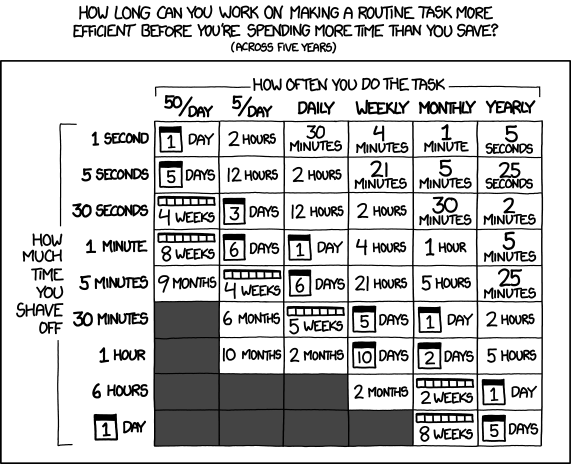
Slashdot reader ShimoNoSeki shares an obligatory XKCD comic...
China

Chinese-Linked Hackers Use Backdoor For Potential 'Sabotage,' US and Canada Say (reuters.com) 10

U.S. and Canadian cybersecurity agencies say Chinese-linked actors deployed "Brickstorm" malware to infiltrate critical infrastructure and maintain long-term access for potential sabotage. Reuters reports: The Chinese-linked hacking operations are the latest example of Chinese hackers targeting critical infrastructure, infiltrating sensitive networks and "embedding themselves to enable long-term access, disruption, and potential sabotage," Madhu Gottumukkala, the acting director of the Cybersecurity and Infrastructure Security Agency, said in an advisory signed by CISA, the National Security Agency and the Canadian Centre for Cyber Security. According to the advisory, which was published alongside a more detailed malware analysis report (PDF), the state-backed hackers are using malware known as "Brickstorm" to target multiple government services and information technology entities. Once inside victim networks, the hackers can steal login credentials and other sensitive information and potentially take full control of targeted computers.

In one case, the attackers used Brickstorm to penetrate a company in April 2024 and maintained access through at least September 3, 2025, according to the advisory. CISA Executive Assistant Director for Cybersecurity Nick Andersen declined to share details about the total number of government organizations targeted or specifics around what the hackers did once they penetrated their targets during a call with reporters on Thursday. The advisory and malware analysis reports are based on eight Brickstorm samples obtained from targeted organizations, according to CISA. The hackers are deploying the malware against VMware vSphere, a product sold by Broadcom's VMware to create and manage virtual machines within networks. [...] In addition to traditional espionage, the hackers in those cases likely also used the operations to develop new, previously unknown vulnerabilities and establish pivot points to broader access to more victims, Google said at the time.

Security

Microsoft 'Mitigates' Windows LNK Flaw Exploited As Zero-Day (bleepingcomputer.com) 25

joshuark shares a report from BleepingComputer: Microsoft has silently "mitigated" a high-severity Windows LNK vulnerability exploited by multiple state-backed and cybercrime hacking groups in zero-day attacks. Tracked as CVE-2025-9491, this security flaw allows attackers to hide malicious commands within Windows LNK files, which can be used to deploy malware and gain persistence on compromised devices. However, the attacks require user interaction to succeed, as they involve tricking potential victims into opening malicious Windows Shell Link (.lnk) files. Thus some element of social engineering, and user technically naive and gullibility such as thinking Windows is secure is required. [...]

As Trend Micro threat analysts discovered in March 2025, the CVE-2025-9491 was already being widely exploited by 11 state-sponsored groups and cybercrime gangs, including Evil Corp, Bitter, APT37, APT43 (also known as Kimsuky), Mustang Panda, SideWinder, RedHotel, Konni, and others. Microsoft told BleepingComputer in March that it would "consider addressing" this zero-day flaw, even though it didn't "meet the bar for immediate servicing." ACROS Security CEO and 0patch co-founder Mitja Kolsek found, Microsoft has silently changed LNK files in the November updates in an apparent effort to mitigate the CVE-2025-9491 flaw. After installing last month's updates, users can now see all characters in the Target field when opening the Properties of LNK files, not just the first 260. As the movie the Ninth Gate stated: "silentium est aurum"

Slashdot Top Deals